
Twenty years ago, we still wrote letters, filled in forms by hand, and scribbled notes in margins. Today, most of us type, swipe, or tap. Keyboards and touchscreens have transformed how we communicate—but they risk erasing one of humanity’s most elegant skills: handwriting.

One of my two most treasured belongings is a sky-blue Caran d’Ache fountain pen, bought on a summer holiday. The other is a simple analogue wristwatch (don’t get me started on disposable digital plastic strapped to the wrist!). For me, nothing compares to the beauty of a handwritten letter—the sweep of ink, the individuality of style, the dignity of effort.
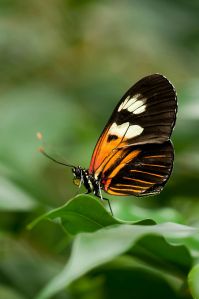
My most treasured teaching memory after 30+ years came from three weeks working with a 12-year-old boy, Nikita. Every day for an hour, he copied my best attempt at an Arial font alphabet—lower case, then upper, then cursive. At first, his pencil crawled like a caterpillar. But day by day, he transformed. At the end of those weeks, he was writing like a butterfly in full flight: graceful, balanced, elegant. When I asked him to write on the whiteboard, one friend laughed, “He’s got the worst handwriting ever.” But before I could intervene, a girl spoke up: “No, Nikita’s got the best handwriting in the class.” Soon, everyone agreed. It was a moment of quiet triumph.
Of course, cave drawings were surpassed by photography. Hand sewing by mass production. Slowly cooked Sunday roasts by microwaves. And handwritten letters by emails and emojis. But some things survive because they are more than practical—they carry meaning.
And here’s where IB Diploma teachers come in. Our exams are still handwritten. AI hasn’t taken our jobs yet, and the future hasn’t stolen our past. Whether Cyrillic, English, Thai, or Arabic, let’s celebrate elegant handwriting. Let’s encourage our students to see it not as an obsolete chore but as a skill of dignity, beauty, and identity.
In the “factory of the future,” handwriting may be rare. But in our classrooms, it can still be cherished. And who knows, perhaps a blue fountain pen and three weeks of care can still turn a caterpillar into a butterfly.
 I think, therefore IB
Leave a comment